Decoding Coriolis Meter Diagnostics for Reliable Measurement Performance
Table of Contents
- 1. Why Coriolis Meters Are Trusted in Industry
- 2. Beyond the “Black Box” : Understanding Meter Vulnerabilities
- 3. Verification vs Calibration vs Validation – Do You Know the Difference?
- 4. The Heart of Verification – Tube Stiffness
- 5. Understanding Frequency Response
- 6. Process Diagnostics – Detecting Multiphase Flow and Upsets
- 7. Industry Benefits
- 8. From Instrument to Smart Asset
- 9. Common Questions
- 10. Summary:
Coriolis flow meters are among the most trusted instruments in modern process industries. They directly measure mass flow, density, and temperature without any moving parts. Because of this, they are often considered “install and forget” devices.
But here is an important question:
Are we truly listening to what the meter is telling us?
Behind every Coriolis meter is a powerful diagnostic engine. When properly used, it can detect installation problems, process disturbances, mechanical changes, and early signs of failure long before they affect production.
In this article, we decode how advanced verification and diagnostics improve measurement confidence, ensure compliance, and protect process quality.
Why Coriolis Meters Are Trusted in Industry
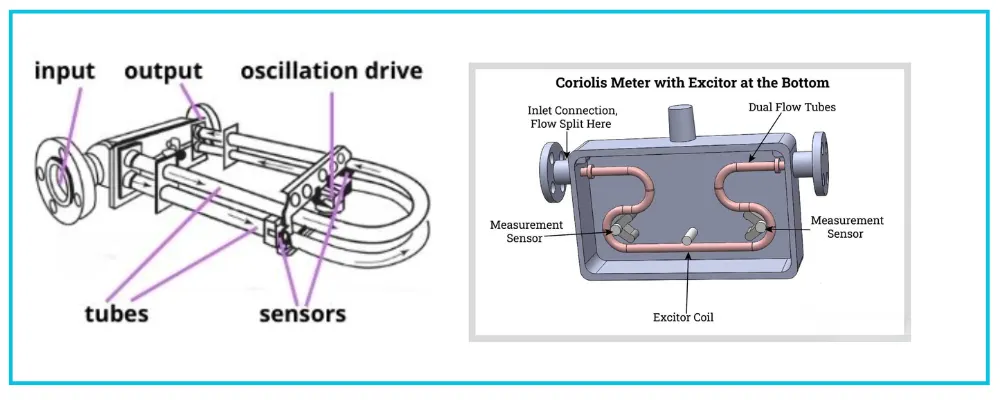
Coriolis meters work on a simple physical principle: when fluid flows through vibrating tubes, it causes a measurable phase shift proportional to mass flow.
Because they measure mass directly, they are not affected by changes in pressure, temperature, or fluid properties in the same way as volumetric meters.
This makes them ideal for:
Custody transfer applications
Chemical dosing systems
Oil & gas measurement
High-value fluid batching
However, even the best instruments are not immune to real world operating conditions.
Beyond the “Black Box” : Understanding Meter Vulnerabilities
Many engineers treat Coriolis meters as sealed black boxes. But in reality, several external factors can influence performance.
Moisture Ingress
If moisture enters the electronics housing, it can affect signal processing and diagnostics.Improper Installation
Excessive pipe stress, misalignment, or unsupported piping can alter tube vibration behavior.Corrosion and Erosion
Abrasive slurries or corrosive fluids can slowly change tube geometry and stiffness.Unexpected Process Variations
Sudden temperature changes, density variations, or multiphase flow (gas + liquid) can disturb readings.Severe Multiphase Flow
While Coriolis meters handle mild entrained air well, large gas pockets can create unstable measurement signals.
The key question becomes:
How do we detect these problems before they impact product quality or compliance?
The answer lies in verification and diagnostics.
Verification vs Calibration vs Validation – Do You Know the Difference?
Many professionals use these terms interchangeably. But they are not the same.
Calibration
Calibration establishes the relationship between true mass flow and the meter’s vibrational signal.
It is typically performed in an accredited factory under controlled conditions.
The output is a calibration factor.Verification
Verification checks whether the meter is still performing according to its original calibration — without removing it from the process.
It evaluates meter health in real operating conditions.Validation
Validation compares the meter’s performance against a known reference measurement in the field.
In industries following ISO 9001 or regulated by audit bodies, maintaining this distinction is extremely important for documentation and traceability.
The Heart of Verification – Tube Stiffness
Every Coriolis meter has a unique mechanical fingerprint.
At the factory, during calibration, the tube stiffness is measured and recorded. This stiffness depends on:
Material properties
Tube geometry
Manufacturing tolerances
If tube stiffness changes, the calibration factor changes.
Why Stiffness Matters
The vibration frequency of the tubes depends on:
Mass
Damping
Stiffness
If corrosion, erosion, or mechanical stress alters stiffness, the frequency response shifts. This directly affects mass flow accuracy.
How Advanced Verification Works
Modern Coriolis meters perform multi-frequency excitation.
The meter is driven at multiple frequencies.
The frequency response curve is measured.
Mass, damping, and stiffness parameters are calculated.
Current stiffness is compared with the factory baseline.
If stiffness remains unchanged → Calibration factor is verified.
If stiffness has changed significantly → The system alerts for inspection or recalibration.
This allows early detection of mechanical damage without removing the meter from service.
For industries handling high-value hydrocarbons, specialty chemicals, or custody transfer applications, this is a major advantage.
Understanding Frequency Response
Think of the Coriolis tube like a musical instrument string.
When perfectly tuned, it vibrates at a specific frequency.
If tension changes, the note changes.
That frequency shift indicates something has changed physically.
In the same way, a Coriolis meter’s frequency response reveals its mechanical condition.
By analyzing this response, we move from reactive maintenance to predictive maintenance.
Process Diagnostics – Detecting Multiphase Flow and Upsets
Coriolis meters perform well with small amounts of entrained gas. But severe multiphase conditions can introduce errors.
Advanced diagnostics monitor:
Drive gain (energy required to maintain vibration)
Signal stability
Density fluctuation patterns
Tube damping characteristics
When gas enters the system:
Tube damping increases.
More energy is required to maintain vibration.
Measurement stability decreases.
The meter can quantify this “effort” and classify severity levels.
Why This Is Important
Early detection of pump cavitation
Identification of air ingress
Detection of flashing fluids
Prevention of custody transfer disputes
Improved batch accuracy
In many plants, operators only notice problems when quality complaints arise. Diagnostics allow intervention before production losses occur.
Industry Benefits
When advanced verification and diagnostics are properly used, industries gain:
Reduced downtime
Faster troubleshooting
Improved audit compliance
Higher measurement confidence
Reduced need for frequent recalibration
Lower lifecycle cost
For industries like oil & gas, pharmaceuticals, food processing, and specialty chemicals, this translates directly into financial savings.
From Instrument to Smart Asset
Coriolis meters are no longer just flow meters.
They are intelligent process sensors.
By integrating diagnostics into plant maintenance systems:
We shift from corrective to predictive maintenance.
We reduce unexpected shutdowns.
We improve data reliability for analytics.
We enhance overall plant performance.
This aligns perfectly with Industry 4.0 and digital asset management strategies.
Common Questions
If verification passes, do I still need recalibration?
Not necessarily. If stiffness and diagnostics show no deviation, recalibration may not be required.Can diagnostics replace calibration entirely?
No. Diagnostics verify mechanical integrity. Calibration establishes traceable accuracy.Is multiphase detection always a measurement error?
Mild multiphase flow may not significantly affect accuracy. Severe multiphase conditions can.Does pipe stress affect verification results?
Yes. Excessive pipe stress can alter tube stiffness readings.
Summary:
Coriolis meters are powerful instruments. But their true strength lies not only in measuring flow but it lies in communicating health.
When we use advanced verification:
We protect measurement integrity.
We strengthen audit trails.
We prevent costly process errors.
We improve confidence across operations.
The real question is not whether your Coriolis meter is accurate today.
The real question is: Are you actively monitoring its health?
Kleev USA will continue to innovate and support the global water industry with advanced measurement solutions.
For more information, please visit our website www.kleevusa.com
“Feel free to share this blog with your colleagues and friends who might find it useful.”